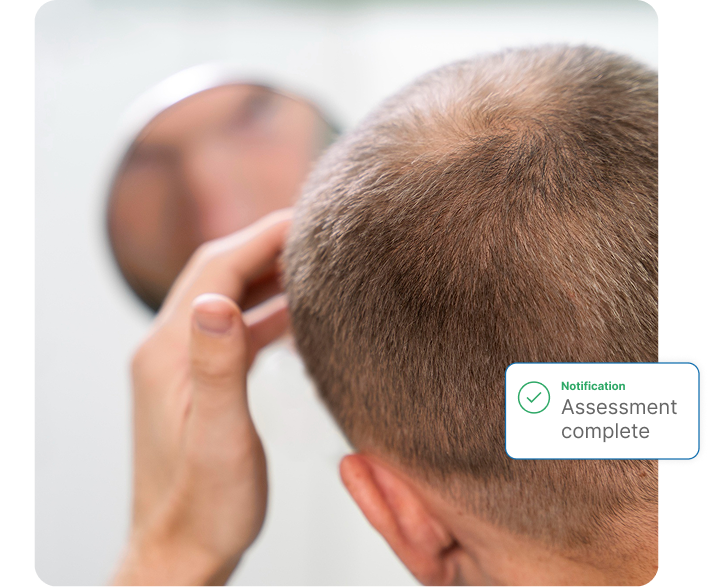
Thinning hair or a receding hairline? Male pattern hair loss is common, and it's treatable.
Complete an online consultation, receive a doctor review, and receive your treatment.
Tell us about your symptoms, medical history and any medicines you currently take so suitability can be assessed properly.
A UK doctor reviews your answers and will only approve treatment if it is safe and appropriate for you.
If approved, treatment is dispensed by our regulated UK pharmacy and delivered discreetly to your chosen address.
Hair loss can affect confidence gradually or feel sudden and difficult to ignore. Our service offers a discreet and structured way to explore treatment options where clinically appropriate, with online assessment and UK doctor review. Every consultation is reviewed by a GMC-registered doctor, so any prescribing decision is based on your symptoms, medical history and overall suitability.
Hair loss is common in men and can develop gradually over time. For many, it begins around the hairline, temples or crown and can become more noticeable with age.
Clinical review is an important part of the process, as not every type of hair loss should be treated in the same way. A doctor review helps assess whether this service is appropriate for your situation.
Our focus is on helping you access the right treatment route for your circumstances, with confidential care and safe prescribing where appropriate.
Your care is supported by UK medical and pharmacy regulations, with prescribing, dispensing and clinical governance handled to recognised national standards.
UK-sourced medicines, dispensed in line with UK regulatory standards and supplied following clinician review.
Secure consultation, confidential ordering and tracked delivery that fits easily into everyday life.
Our pharmacists and prescribers are available to answer clinical questions as part of the service, ensuring you have access to professional advice when you need it.
Men looking for clinically appropriate hair loss treatment
Those experiencing gradual hair thinning or male pattern hair loss symptoms
People who can complete a full medical consultation honestly and accurately
Those who understand that treatment is subject to doctor approval
Find answers to common questions about hair loss treatments, organised by topic.
Male pattern hair loss, or androgenic alopecia, is a common cause of hair loss.
It is a hereditary condition that causes hair follicles to gradually shrink over time, leading to thinning hair and a receding hairline.
This process can take decades, so if you have experienced rapid hair loss (within a year) or scalp irritation causing bald patches, you should seek medical advice from your GP to rule out thyroid conditions or other underlying causes.
Around half of all men experience male pattern baldness by the age of 50, with the most common type beginning around the age of thirty.
Male or female pattern hair loss usually develops gradually and may include a receding hairline, thinning hair on the crown, increased hair shedding when washing or brushing, and a gradual reduction in hair density over time. Our online consultation helps determine whether treatment is suitable for you.
Male pattern hair loss is caused by a combination of genetics and hormones. The hormone dihydrotestosterone (DHT) causes susceptible hair follicles to shrink, resulting in shorter, finer hairs and eventually reduced hair growth.
Genetic sensitivity to DHT is the primary cause of male pattern hair loss. This hormone gradually shrinks hair follicles over time, leading to thinner and shorter hair growth until follicles eventually stop producing visible hair.
As people age, the hair growth cycle naturally slows, and follicles may produce finer and less dense hair. This process is gradual and often combines with genetic factors to increase overall thinning.
High stress levels, poor sleep and nutritional deficiencies can contribute to temporary hair shedding known as telogen effluvium. This type of hair loss is often reversible once the underlying trigger is addressed.
Certain medical conditions, including thyroid disorders and autoimmune diseases, can disrupt normal hair growth cycles. Sudden or patchy hair loss should be medically assessed to rule out underlying causes.
Some medicines, including certain hormone therapies, can contribute to hair thinning as a side effect by disrupting the hair growth cycle. If hair loss begins shortly after starting a new medication, clinical review is recommended.
WebMed offers a prescription tablet treatment to help slow hair loss through prevention and, in some cases, regrowth. Treatment is only supplied if our prescriber determines that it is safe and appropriate for you.
The tablet treatment works by reducing levels of DHT, the hormone responsible for shrinking hair follicles. By lowering DHT, it can help slow hair loss and may promote regrowth in some men. It may take three to six months of continuous treatment before improvements become noticeable.
Where treatment is suitable, it may be available as a branded product or as a lower-cost generic version containing the same active ingredient. Both provide the same clinical effect when taken as directed. Many patients choose the generic option because it is typically more cost-effective.
Hair loss treatment is most effective when started early, before significant follicle damage has occurred. Early intervention improves the likelihood of stabilising hair loss and preserving existing density.
Most people require at least three to six months of consistent treatment before noticing visible changes. This delay is due to the natural hair growth cycle, which takes time to respond.
Treatment typically aims to slow further hair loss and may improve hair density in some areas. Results vary widely, and while some people experience regrowth, others may mainly see stabilisation.
Hair follicles operate in cycles of growth, rest and shedding, which means visible improvement can only occur as new growth phases begin. This biological process explains why results are gradual rather than immediate.
Treatment may help slow further recession at the hairline, particularly in the early stages of hair loss. However, regrowth in this area is often less predictable than on the crown.
Treatment is often considered effective if hair shedding reduces and overall density stabilises over time. Photographic tracking can help identify subtle improvements that are not obvious day to day.
Signs of regrowth may include thicker hair strands, improved scalp coverage and reduced visibility of thinning areas. These changes usually develop gradually over several months.
If treatment appears less effective, a clinical review may be needed to assess adherence, dosage or suitability of alternatives. Hair loss progression can also fluctuate naturally over time.
Some people experience temporary increased shedding in the early stages of treatment as weaker hairs are replaced. This phase is usually temporary and may stabilise with continued use.
The tablet is taken by mouth once daily at the same time each day to maintain stable levels in the body. Consistent daily use is important, as irregular dosing may reduce effectiveness.
If a dose is missed, take it as soon as you remember, unless it is close to the next scheduled dose. In that case, skip the missed dose rather than doubling up.
During the first few weeks, most people do not notice visible changes, as hair growth cycles take time to adjust. Some people may experience temporary shedding before stabilisation occurs.
Initial shedding can occur in some people during treatment and may settle over time as hair growth cycles adjust. This phase typically settles with continued use over time.
Hair loss treatment usually needs to be continued long term to maintain results. Stopping treatment often leads to a gradual return of hair loss over time.
If treatment is discontinued, hormone levels return to their previous state and hair loss typically resumes gradually. Any gains made during treatment may be lost over several months.
Hair loss can return after stopping treatment because the underlying genetic and hormonal causes remain unchanged. The speed of recurrence varies between individuals.
Treatment can often be restarted after a medical reassessment to confirm continued suitability. Results may take time to reappear after restarting.
Possible side effects may include changes in libido, mood changes or mild physical symptoms. In some cases, sexual dysfunction and psychiatric side effects have persisted in patients even after they have stopped taking finasteride. Most people do not experience significant side effects, but all medicines carry some risk.
If side effects occur, discuss them with a healthcare professional to determine whether continued use is appropriate. In some cases, adjusting or stopping treatment may be recommended.
Moderate alcohol consumption is generally considered acceptable, but follow the medical advice specific to your treatment.
Regular exercise is safe while using hair loss treatment and may support overall wellbeing.
A balanced diet that includes adequate protein, iron and essential vitamins supports normal hair growth. Nutritional deficiencies can worsen hair shedding in some people.
Managing stress through sleep, relaxation or lifestyle changes may help reduce temporary hair shedding. Chronic stress can negatively affect the hair growth cycle.
Gentle hair care, including avoiding excessive heat and harsh treatments, can help reduce breakage. A consistent routine supports overall scalp health.
Smoking may accelerate hair thinning by reducing blood flow to the scalp. Regular exercise and protecting the scalp from excessive sun exposure may support overall hair health.
Hair transplants involve relocating healthy hair follicles from one part of the scalp to thinning areas. They are typically considered for more advanced hair loss, or when medication alone is not sufficient.
PRP therapy uses platelet rich plasma derived from the patient's own blood, injected into the scalp to support hair follicle activity. It is often used as a supplementary treatment.
Red light therapy uses low level light to stimulate hair follicles and may help support hair growth in some people. It is usually used alongside other treatments rather than on its own.
Hair regrowth typically develops gradually over three to six months, with continued improvements possible beyond this period. Consistency of treatment is key to maintaining results.
Early signs of improvement may include reduced shedding, followed later by increased density and a thicker hair appearance. Changes are often subtle at first.
Maintaining results requires ongoing treatment, as stopping medication usually leads to a gradual return of hair loss over time.
Treatments available through this service are prescription-only
A GMC-registered doctor makes all prescribing decisions
Some forms of hair loss are not suitable for this treatment
This treatment is for male pattern baldness or maintenance following a hair transplant
Results and suitability vary from person to person
"The process was really easy and straightforward. My prescription was approved quickly and arrived the next day in discreet packaging."
"So much easier than getting a GP appointment. I felt like my consultation was taken seriously and the treatment is already making a difference."
"Really impressed by how professional the service was. Great communication throughout and fast delivery. Would definitely recommend."
If you would like to explore whether hair loss treatment may be appropriate for you, begin by completing a confidential online medical consultation.
We combine clinical rigour with a simple, discreet service, so you can access the right care without the hassle.
Every prescribing decision is reviewed by a qualified UK doctor.
Supplied in line with General Pharmaceutical Council standards.
Plain packaging, secure ordering and tracked delivery.
Treatment is only supplied after a proper suitability review.
Next working day delivery and collection choices are available.
Complete your consultation online in minutes, at a time that suits you.
Our clinicians are GMC-registered and work within UK medical and prescribing standards.
Medicines sourced from trusted manufacturers